Showing posts with label 19th century. Show all posts

Tuesday, 29 September 2015

Running Clapham Common: RunThrough 10k 2015 (and a 15 mile race in 1869)

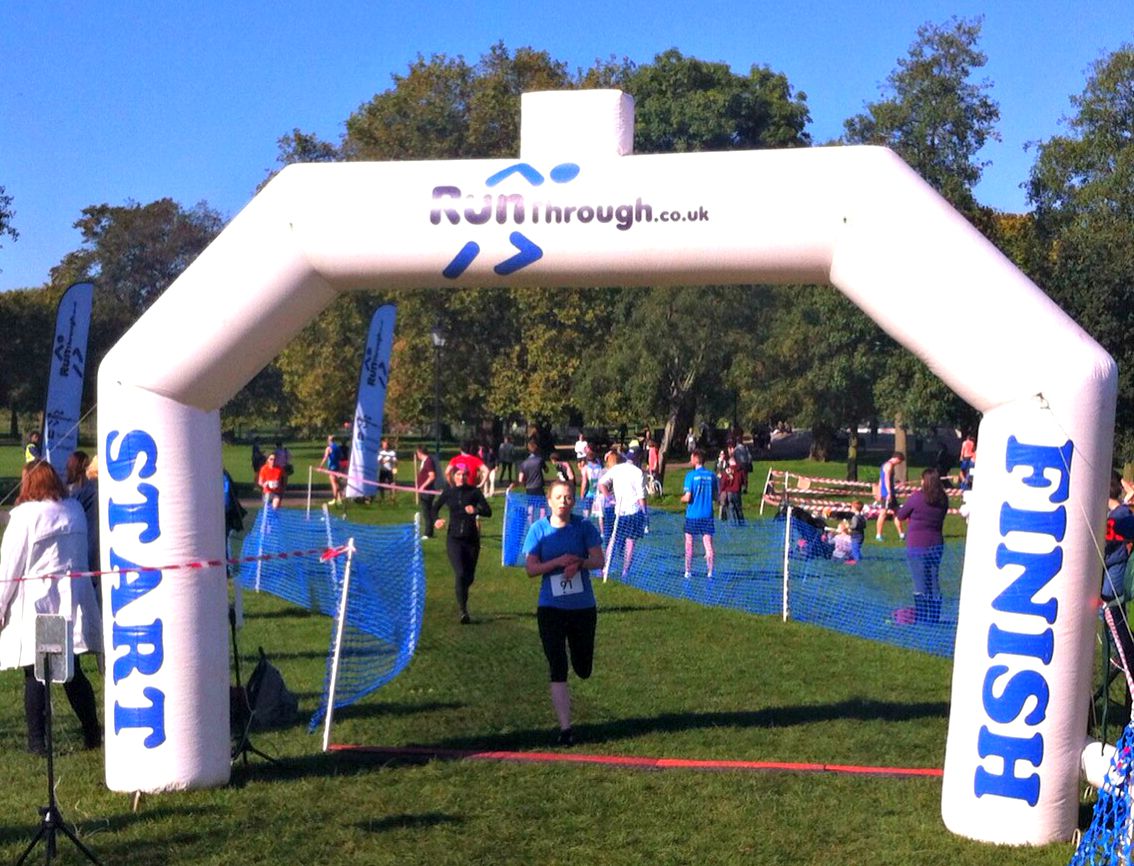
I enjoyed the Clapham Common 10k organised by RunThrough on Saturday, with nearly four hundred runners finishing a three lap course around this flat South London park. I suspect too that it will be my last race in sunglasses this year - a glorious sunny morning on this first weekend after the Autumn Equinox. Dan McGrath finished first in 33:50, first woman finisher was Imogen Aimsworth in 36:43 (full results here). I took a couple of minutes off my PB in my first 10k for two years, so was more than happy.

The start/finish was near to the park's grand Victorian bandstand, which along with the local underground station inspired the event's fine medal 


There's always people running round Clapham Common, and a number of local running groups/ clubs use the park regularly - including Clapham PioneersClapham Runners, Sweatshop's running group (from their shop just off Clapham High Street in Voltaire Road) and indeed RunThrough themselves who have a free Monday night session there. 


The Common doesn't seem to have quite the rich running history of other South West London parks such as Richmond and Wimbledon - where organised cross country running started out - but it was featuring in races even before it was drained and recreations grounds laid out in the 1870s. This report from 1869 is of a Hare and Hounds race organised by Brixton Football Club. Two 'Hares' - F. Bone and Harry Foster - laid a paper trail across nearly 15 miles of SW London in one hour 57 minutes for the 'hounds' to follow. As well as Clapham Common their run in a loop from Brixton took in Streatham, Tooting and Wandsworth Commons.

The Sportsman, 10 March 1869

Wednesday, 9 September 2015

Railway Jack & the Lewisham Pet: the Perch brothers & 19th century pedestrianism

Before the rise of athletics clubs in the second half of the nineteenth century, the main focus for organised running in England was on races between individual  runners. In a format not unlike boxing, runners with outlandish nicknames challenged each other through newspaper columns and large crowds turned up to watch and bet on the outcome. Newspapers including Bell's Life in London and The Sporting Life promoted the sport, making national celebrities of some runners, and many local pubs were also involved both in hosting events in their grounds (crowds meant drinkers) and as places where the competitors would lay down their respective stakes for prize money. Runners sometimes had backers who put up the stake money for them, in return taking their share of the winnings. The whole sport was known as 'pedestrianism', a term that covered all kinds of foot-races, including walking races, sprints and longer distance runs.

Two prominent pedestrians in the mid-19th century were brothers from Lewisham: John Perch (alias Railway Jack) and Thomas Perch (sometimes known as the Lewisham Pet).  This is where my club, Kent AC, is based - so as part of exploring its history I have been looking into the earlier world of pedestrianism in this part of South London.

The 1841 census shows the Perch  family living at No. 1, Gothic Cottages, Rushey Green – at the time John was 15 with another brother Richard of the same age (twins?), along with siblings including Thomas (13 - he was baptised in May 1829 at St Mary's Church, Lewisham) and Joseph (7). The Gothic Cottages seem to have been at 110 Rushey Green - an

The father’s occupation is given as castrator. Both Thomas and John were subsequently listed as having the same occupation in the 1851 and 1861 census respectively - in the latter John was living with his parents at 7 James Place, Lewisham with father and son both giving occupation as ‘castrator of stock’.  This is a reminder that at this point Lewisham in Kent had not yet been completely swallowed up by the expanding metropolis - there were still farms in the area.

Railway Jack

Not along after this, John Perch began to make a name for himself as a sprinter and hurdler. In January 1844 'Two very excellently contested foot-races took place... near the eighth mile-stone at Lewisham' with 'a very numerous assemblage of the patrons and admirers of pedestrian performances'. Goldsmiths of Greenwich beat Banks of the West-end over 250 yards and in the second match Perch beat Par over 150 yards (West Kent Guardian, 20 January 1844).

West Kent Guardian, 20 January 1844
Although this Perch is not specifically named, it seems most likely that it was John, as there are other reports from the same year that identify John Perch - or Railway Jack - as a runner, and none I have found at this stage that mention Thomas. We know of some of John Perch's races through contemporary reports, and others from newspaper listings of forthcoming events:

- in August 1844, he won a hurdle race over 350 yards at the Tiger's Head in Lee Green, Lewisham (see post on this race at Running Past);
- 'Perch of Lewisham (alias Railway Jack), and Naylor' were scheduled to 'run a match on Wednesday September 18 [1844] at the Beehive Cricket Ground, Walworth, distance 200 yards, and to leap 10 hurdles, 20 years apart, each hurdle to be 3 feet 4 inches high' (The Era, 8 September 1844);
-  In January 1845 'Railway Jack' - this time described as 'of Greenwich' beat George Parry ('alias Jim Crow') over 150 years at Southend, Lewisham (8 February 1845);
- Later that year he 'ran a quarter of mile race for £5 a side' against W. Berry of Lambeth, with Perch having a head start of ten yards in the race at South End, Lewisham: 'The start was a good one, both going away at a rattling pace. Perch however kept ahead throughout the distance, and went in an easy winner, Berry having given up some distance from the finish' (Bell's 14 Sept 1845)
- In November 1845 he was scheduled to run against Pearce Naylor, over 150 yards at the Tigers Head in Lee Green, Lewisham (The Era, 23 November 1845).

There are reports of challenges too: 'Edward Smith will accommodate Perch, alias Railway Jack, of Greenwich, with a match, and will give him two yards start in 150 for £5 or £10 a side, or he will run him  a quarter of a mile and leap 15 hurdles for £10 a side. The money will be ready at Mr Parr's, Green-street, Grosvenor Square, to-morrow' (Bell's, 4 Feb 1844).

John Perch '(alias Railway Jack) of Lewisham' won 'a silver stop watch' in a 150 yards race beating five others, at the Kings Head in Bexley Heath in November 1847. There was a dispute about whether he should have been allowed to receive the prize as the race was for runners 'who had never won more than £5 in any race', and Perch had  previously won a race against Berry of Lambeth advertised as being for a £10 prize. However the landlord of the Fisherman's Arms in Greenwich confirmed it was in fact only for £5. The landlord is described as the 'stakeholder for that race'- the origin of this term is the person who holds the stake put down for a wager (Bell's, 7 November 1847).

(Bell's Life in London, 7 November 1847)
Intriguingly in 1844, it was reported that 'Railway Jack's youth and S.Penny of Greenwich' will 'run tomorrow... at the Green Man, Southend, Lewisham' (Bell's 10 March 1844). Could this have been his younger brother? Certainly in the following year, both Perch brothers took part in a 350 yard hurdle race in a field by the Tigers Head, Lee along with James Kitchener (the Hampstead Stag) and Ned  Wild (Merrylegs) (Bell's 7 September 1845).

Thomas Perch, the Lewisham Pet

In September 1847, The Era reported 'fun and frolics' in a quarter of a mile race between two runners, 'one named Cross, and the other designated the Lewisham Pet' (The Era, 19 September 1847). The former won in a race in Charlton-lane, Blackheath, where both 'bounded like affrighted antelopes'. The identity of the Lewisham Pet isn't disclosed, but in the report of race in 1850, the same paper refers to Perch 'who revels in the sobriquet of the Lewisham Pet' (Era, 29 September 1850). This was Thomas Perch, though confusingly in this period there was also a boxer, 'Young Bostock' known as 'the Lewisham Pet' (Bell's 26 November 1848).

(The Era, 19 September 1847)
If Thomas Perch started off as John's lesser-known sibling with reports referring to him as 'brother to Railway Jack' (Bells, 28 January 1849) he soon seems to have established a reputation as a runner in his own right.

In January 1849 'nearly two thousand persons assembled' to watch him beat Joseph Judd of Westminster in a 120 yards race at Beddington Corner, Surrey for which 'both men had been in active training'. He was described on this occasion as 'about 5 feet 5 inches in height, and weighs about 8 stone; when stripped, his skin looks a nut brown, is well knit together, and all runners of his size will find him a troublesome character. He first showed in public a short time ago by beating Price of Mile End rather easy in a six score yard race' (Bell's, 28 January 1849).The latter race with William Price was over 130 yards in December 1848 (Bell's, 3 September 1848)

(Bell's Life in London, 28 January 1849)

In the following year he raced James Mayne of Mile End, for £25 a side, at the Flora Ground in Bayswater (Bell's Life in London, 29 September 1850). Once again the report emphasises the runners' preparation - this was a serious sport, not a casual contest between talented but unprepared athletes: 'Both had been actively trained for the event, Mayne under the charge of John Smith of Turnham Green, and Perch had the advice of his brother John at Charlton'. The result 'in one of the best contested races ever witnessed' was declared a dead heat.

(Bell's Life in London, 29 September 1850)

The rematch the following week saw Perch win 'after seven false starts', proving himself 'a very smart runner... a good starter, very quick in getting into full speed' against his 'remarkably game' competitor (Bells 6 October 1850).

Other Thomas Perch races reported as having taken place or being scheduled included the following:

- In April 1849 he was scheduled to race John Owen of Bermondsey at the Red Lion, Smitham Botton (Bell's 25 March 1849);
- In September 1849 he was due to race William Allen of Woolwich over 120 yards, with deposits at the Yorkshire Grey, Blackheath Hill (Bells,  16 September 1849);
- In November 1849 he was planning a 200 yards race with James Patterson (Bell's 21 October 1849);
- In December 1850, T.Perch of Lewisham and R. Marsh of Marylebone were due to run 250 yards at the Isle of Dogs, £10 a side (Bell's Life in London and Sporting Chronicle, 1 December 1850);
- In 1852 he was scheduled to race Isaac Howarth of Sheffield over quarter of a mile for £10 a side at Copenhagen grounds (Islington), with Perch 'to have four yards start' (Bell's 2 May 1852);
- In the following year he was due to run against H. Stevens of Eltham, the latter with a 'five yards start' with the stakes to be held at the Royal Oak, Greenwich (Bells 6 March 1853).

Perch both issued to challenges to other runners, and was in turn the subject of challenges to him. An example of the former from 1850 reads: 'Thomas Perch will run Jesse Smith, Dawkins, Connor, or Sillitoe a quarter of a mile, or Washington of Crayford three yards  start in 200 for £25 a side. A match can be made at Mr Clarke's, Yorkshire Grey, Blackheath-hill' (Bell's 8 Dec 1850).

Conversely, in April 1853, R.Elliot of Kings Cross challenged 'Perch of Lewisham, Stevens of Eltham' and a couple of other runners to race for '100 or 120 yards a side' (Bell's 17 April 1853). Acceptances of challenges were also published in the press. For instance, it was reported in 1850 that  'Perch of Lewisham will accept Newman's challenge to run 140 yards for £25 a side, and will meet him a the Yorkshire Grey, Blackheath Hill, tomorrow (Monday) night; to run in three weeks from the first deposit. The Editor of Bell's Life to be a stakeholder' (Bells Life, 17 February 1850).

In 1859 Thomas Perch repleid to a challenge from W. Price offering for a match to be made at the Duke of York in Greenwich (Bell's 27 Feb 1859). A race between the two did go ahead at the White Lion, Hackney Wick: Price 'won as he liked by a long distance; Perch being, apparently, anything but fit for a running match' (Sporting Life, 24 March 1859). Perch wasn't finished yet however.  He was nominated to take part in a 100 yards race at the same venue soon afterwards - 'the rendezous of all the Victoria Park pleasure seekers' - in the following month for a silver tankard prize (Sporting Life, 13 April 1859). And in 1860 he was still receiving public challenges: 'T. Schofield of Woolwich will run T.Perch of Lewisham, or Steven of Eltham... An answer to the Sporting Life will be attended to' (Sporting Life, 21 November 1860).

Cricket

I have also found reference to a couple of cricket matches featuring the Perch brothers. A match between  Lewisham St Germans Club  and Bexley Heath in July 1853 featured an R. Perch, J.Perch and a T. Perch (The Era, 17 July 1853). Another match,  between Lewisham St German's and the City Club at the Roebuck Ground in Lewisham featured a John Perch (who hit 'an immense score on such a ground') and and a R. Perch (The Era, 1 August 1852). In my family history search at ancestry I didn't find another Perch family in Lewisham with individuals with the right name and right age, so it seems almost certain that these were the same Perch brothers.


At some point the Perch brothers must have hung up their running and cricket shoes. In the 1871 census, Thomas was living with his wife at 8 Mercy Terrace, Lewisham – his job given as a labourer. Interestingly at that same address in 1881 were to be found the Brewers - one of several Lewisham families who went on to become important figures in the history of Essex County Cricket Club as groundsmen and players.

Aside from some local colour - nice to know that the Perch brothers both lived within a few minutes run of the Kent AC's current Ladywell track - what does all this tell us? Well in my reading about this period 'pedestrianism' is sometimes looked down upon as some kind of circus sideshow prior to the emergence of 'proper' running under the aegis of running clubs and the Amateur Athletics Association. From my research into the Perch brothers it is clear that they were dedicated runners - training hard and sustaining careers over a number of years as part of a national circuit of like-minded athletes. And judging by their involvement in cricket, they were not separate from the emerging world of organised sports clubs, but at its heart.

Friday, 26 June 2015

'Running Race for Young Ladies' (1828)

'Running Race for Young Ladies at Tenterden' by Robert Cruickshank is an 1828 illustration from Pierce Egan's 'Life in London or, the Day and Night Scenes of Jerry Hawthorn, esq., and his elegant friend, Corinthian Tom, accompanied by Bob Logic, the Oxonian, in their rambles and sprees through the Metropolis'. This fictional account of London adventures was first published as a monthly serial from 1821. 

In reality races involving women would have been a rarity in this period, though not unknown. I don't know whether Cruickshank based his illustration on any real event, but it would have been hard going too far or fast in dresses like these!

Monday, 1 June 2015

Wardown parkrun... and 150 years of running in Luton

I grew up in Luton in Bedfordshire, so was delighted when I heard that a parkrun was starting in the town's Wardown Park in 2015. I went along for the first time in that May on only its sixth event and it  it already felt like a long established event, with nearly 200 people taking part and a friendly community emerging.

All parkruns have the same format, but they also reflect the unique character not only of their courses but of their local running communities. Wardown parkrun that weekend included nearly 50 runners from the main local clubs - Luton AC, Stopsley Striders and Dunstable Road Runners. A feature of the run too was a preponderance of strong young runners up front - five of the top ten finishers were under twenty years old, led by Rhys Lewis (Luton AC) in 17:40.


The start of Wardown parkrun, 30 May 2015

I have run there a few times since, and returned in May 2025 ten years after my first visit to find it still very much in good health.

The 5k course, mostly on tarmac, takes in three and a half laps of the lake in the park, along well-shaded tree-lined paths. No real hills, but a short slope near the finish that you come up four times. People meet up by the bandstand for the briefing, before walking down together to the start by the lake at the South West end of the park (New Bedford Road side).  The finish is up by the Museum.

A short history of running in Luton

Wardown parkrun is the latest development in a history of organised running in the town stretching back at least 150 years.

A Luton Athletic Society and Cricket Club was in existence by 1873, when the committee of the club announced that they had secured what was to become known as Dallow Road recreation ground for its use  (1). The club held an athletics meet there  in October 1873 with various track and field events (2). By the times of its 1888 athletic fete, cycling had been added to the programme (3).

Luton Times, 28 June 1873

There was also a 'Luton Hare and Hounds club', reported  in March 1875 to have run 'between 9 and 10 miles' cross country from Luton to Caddington and Kenworth and over Dunstable Downs (4).

Amateurism was a big deal in this period, with controversy over the extent of awarding prizes rather than cash to get around the rules prohibiting payment. It was presumably in this context that in 1892, Luton was expelled from the Amateur Athletics Association  'for not complying with an order re. under value prize' (5).

I assume relations must have been repaired, because in 1894 J. Daffern of the AAA was a handicapper at the club's Whit-Monday sports day. The Luton Times reported that  'The annual Athletic Sports of the Luton Athletic and Cycling Club, took place on the Dallow Lane ground, in the most delightful weather, on Monday afternoon. The many attractions offered drew together an enormous crowd numbering, it was estimated, at least five thousand persons, the largest number which has ever assembled to witness the sports of this club'. A mixture of running and cycling races drew competitors from around the country, and the event also featured a failed balloon launch and music from the Red Cross Band -  'In the evening the band played for dancing, which was largely indulged in by those present' (6).

The following Whit Monday (1895) the same event was held at Luton Town Football Ground, with a crowd of 3,000. This time the balloon ascent went smoothly.  There were Half Mile and One Mile races, the former won by C S Montague of Finchley Harriers (7). By 1899, however, the Whit Monday sports meeting had dwindled. 'Meager weather' may have been one factor in  the event at the football ground attracting less than 1,000, many of them children. The races failed to attract runners from outside the town, and the organisers made a financial loss (8).

There seems to have been a decline in athletics at this point, but a new Luton Athletic Club was launched at a meeting on 21 July 1908, held at the Central Cafe, in Cheapside: 'The need for a well-managed athletic club in the town has been keenly felt for years past. At last a move has been made (the suggestion coming principally from the employees of the Vauxhall and West Hydraulic Engineering Company)'. The club was offered the use of the Vauxhall ground in Kimpton Road. The meeting decided that  'The club is limited to amateurs, and the colours are the cardinal shirt and white knickers' (9).

A.J. Harman was elected captain at that first meeting and in the following year, in March 1909, he won what was said to be the first Marathon race in the town over 'a course of nearly 20 miles' which started in Park-square and proceeded 'via Dunstable, Houghton Regis, Sundon, Streatley and back along New Bedford Road' (at this time the Marathon distance hadn't been completely standardised). Ten of the twelve runners finished, greeted by 'a tremendous crowd' (10).

Shortly afterwards, the new club's first meet took place on a grass track laid out on People's Park, with races ranging from 100 yards to the mile. The crowd of up to 1500 in May 1909  'proved an exceedingly unwieldy handful for the perspiring committee of eight, with the assistance of one policeman' (11).

The club seems to have been renamed as Luton United Harriers and Cycling Club by the following year, perhaps as a result of a merger, with what was reported in July 1910 as  'the newly formed Luton United Harriers and Cycling Club' holding races at People's Park with 'Over 6,000 people... assembled round the track' (12). The club's Headquarters in this period were at All Saints Institute, Beech Hill, from where its cross country races sometimes started and finished (13).

People's Park is on a slope so less than ideal for athletics, and so Luton United Harriers explored other alternatives. In 1912, it  held a sports day at Stockwood Park, with running, cycling and some novelty events such as egg & spoon and sack races (14). The club also organised a one mile race at the town's American Skating Rink (15- not sure where this was in the town).

The club also lobbied the Council for the use of Wardown Park, a former private estate acquired by the Council in 1904 for development as a town centre park. After being refused permission to hold a sports day and gala  in 1911 (16) , the club applied again and a successful event was held at the Wardown Park cricket ground in May 1913 (17).

In the summer before the First World War, Luton United Harriers  (with Luton Town Football Supporters Club) held another  Whitsun Tuesday sports day in Wardown Park, where the competitors included Willie Applegarth who 'showed marvellous sprinting powers and he was warmly applauded for his success' (18). Applegarth, who ran for Polytechnic Harriers, was one of the world's fastest runners at this point having equalled the world 100m record and set the world 200 yards record.

The large industrial firms that were growing in the town in this period also entered into athletics, with their own sports clubs and grounds. In 1914 the sports day of Kent's Athletic Club included a mile relay race for local engineering firms with teams from Kent's, Vauxhall, Davis and Waterlow's ('Artisans' Athletics', Luton Times, 17 July 1914).

The war took its toll on the club, as with all parts of society. For instance, Private Alfred Smith (58 New Street), a moulder by trade and 'trainer of the Luton United Harriers', was shot dead in 1915 (19). Military personnel from all over the world were based in camps in the Luton area during the conflict, and the cricket ground in Wardown Park was used for Regimental Sports Days for the Royal Field Artillery based at Biscot. These were held in 19161917 and 1918 and races including other military units from the town, munitions workers and nurses. The 1916 event included a cross country race starting at Wardown and heading 'to the "Three Horseshoes" Leagrave, and then to Stopsley, returning by the same route. The distance was 8000 yards' (Luton News, 26 July 1916)

Regimental Sports at Wardown, 1918
(from Luton World War One- great war stories)
Athletics revived after the war and by the mid-1920s a permanent grass track had been provided at Wardown Park. The Midland Counties AAA championships were staged in 'the new sports ground at Wardown Park' in June 1928 (20). Luton United Harriers also acquired “Oxford Hall”, 2 Union Street as their headquarters in 1926 (21).

Bedfordshire Times, 15 June 1928
Women's athletics was taking off in this period. The club's first recorded female athlete, noted in 1925, was Ena Smith (Luton A.C. History).  The first ever women's national cross country championship was held at Luton Hoo Park in 1927 ('Modern Amazons Plucky Running', Western Daily Press, 14 February 1927). National cross country championships have taken place in Luton, usually at Stopsley, on a number of occasions since - including the first combined men's and women's champs in 1995. Paula Radcliffe, who  ran for Bedford and County AC, won the 1996 national students cross country champs in Luton.

By the mid-1930s, Luton United Harriers seemed to have been joined by another (new?) Luton Athletic Club. There was a Luton and District Athletic League, with four teams competing for the Walker Cup - Luton AC, Luton United Harriers, Bedford and County AC and RAF Cardington. The last match before the Second World War took place at Wardown in July 1939, with Luton AC winning the League (22). Another Luton team, Luton and District Athenians, is mentioned as competing against both in the 1934 Beds Cross Country Championship (23). The three Luton teams merged as Luton United Athletic Club in 1962/3 (24)

Wardown Park Sports Ground - where grass track was laid out in mid-1920s
(my school, Icknield High, held its sports days there in the 1970s, I believe I once ran the 800m there)

In 1952 the Bedfordshire County AAA Championships were held at Wardown, watched by '2000 people... basking in brilliant sunshine' (25). By this point though there was increasing discontent at the lack of an all-weather track in the town.  'No cinders yet for Luton's cinderella of sport', N.S. Paul noted in the Luton News on 1 July 1954, criticising the Council: 'it is a disgrace that Bedfordshre has no track or arena fit for international events...only a grass track in Wardown - when not debarred by other events going on there'.

In the post-Second World War period, Vauxhalls became increasingly important in athletics, as the company also dominated the town as its major employer. The 'first full-scale athletic meeting held at Vauxhall Motors' new ground' in 1953, included a crowd of 6,000 with a funfair and trick motor cycling as well as athletics. Teams competing in races included Vauxhall Motors Recreation Club, Luton United AC, Skefco AC (another local workplace team) and others from further afield (26).

Vauxhall sports  ground c.1980, with running track at top of picture
(my dad worked in the building at bottom when it was the engineering/design centre)

The annual Vauxhall sports day were largely based around athletics and and cycling in the 1950s but throughout the 1960s grew to a huge event, the Vauxhall Spectacular, with races supplemented with celebrity appearances, car shows, show jumping, fairground rides and more. I remember going to them as a kid, as my dad worked there. They came to an end in the mid-1980s, as the firm began to wind down its presence in the town - car production ceased in 2002. In 1998, the Vauxhall athletics club merged with Luton United to form the current Luton A.C. Some of the former Vauxhall Recreation facilities have survived as Venue 360. One of the last great triumphs of the Vauxhall Motors Athletic Club came in 1990 when a team broke the world record for a relay run from John O'Groats to Land's End.

Vauxhall Mirror, 21 June 1990
from Bedfordshire County Council Archives

An all weather track was opened at Stockwood Park in 1977, where it remains having been resurfaced a couple of times since. Luton AC's clubhouse is there too. In Luton's adjoining town, Dunstable Road Runners was formed in 1983. Another local club, Stopsley Striders, was formed in 1982 by Tony Simmons - a former Luton United runner who won a silver medal in the 10,000m in the 1974 European Championships, and set a world half marathon record  in Welwyn Garden City in 1978 of 62 minutes 47 seconds. 

Another Lutonian distance runner was Ian Thompson.  Born in Birkenhead, his family moved to Luton where he attended and ran for Luton Grammar School and Luton United. Thompson won Gold in the marathon at the 1974 Commonwealth Games, his time of 2:08:34 still being a championship record.
 
Thompson in the lead in a 1964 race at Luton Grammar School


No Luton running history is complete without mentioning its footnote in the history of the London Marathon. In the 1970s and 1980s, long distance running legend David Bedford owned the Mad Hatter nightclub in Luton (a place I sometimes frequented). As mentioned in the 2015 London Marathon magazine, 'On a Saturday night in 1981, future London Marathon race director and former 10,000m world record holder Dave Bedford was in the Mad Hatter, the nightclub he then owned in Luton. Several beers down, he accepted a bet of £250 that he could not complete the following morning’s inaugural London Marathon. Four piña coladas, a phone call to race co-founder Chris Brasher, a king prawn curry and another pint later, Bedford finally got to bed at 04:45. Just 75 minutes later he awoke and headed to the start. Despite being spotted on BBC TV looking less than his usual vigorous self, Bedford completed the race before falling asleep in a pub'.

And on 18 April 2015, parkrun came to Luton. Long may it last.

The finish line at Luton Wardown parkrun, 17 May 2025.

[post updated May 2025]

Sources:

(1) Luton Times, 28 June 1873.
(2) Luton Times, 11 October 1873.
(3) Bedfordshire Times, 4 August 1888.
(4) Luton Times, 20 March 1875.
(5) Manchester Courier, 19 December 1892.
(6) Luton Times and Advertiser, 18 May 1894.
(7) Bedfordshire Times, 7 June 1895.
(8) Bedfordshire Advertiser, 26 May 1899.
(9) Beds Advertiser 24 July 1908/
(10) Beds Advertiser, 19 March 1909.
(11) Beds Advertiser, 2 June 1909.
(12) Luton Times, 29 July 1910.
(13) Luton Times, 15 November 1912.
(14) Luton Times, 31 May 1912.
(15) Luton Times, 1 Nov 1912.
(16) Luton Times, 29 March 1912.
(17) Luton Times. 16 May 1913.
(18) Beds Advertiser,5 June 1914.
(19) Luton Times, 3 September 1915.
(20) Bedfordshire Times. 25 May 1928.
(21)  Luton Athletic Club History 
(22) Bedfordshire Times, 28 July 1939.
(23) Bedfordshire Times, 26 January 1934.
(24)   Luton Athletic Club History
(25) Bedfordshire Times, 23 May 1952.
(26) Luton News, 25 June 1953.

See also: 1970s Luton schools cross country at Stopsley, including programme for 1975 Luton United AC races.

Monday, 24 November 2014

South of the Thames Cross Country

Last week was a good one for cross country, with events across the UK on nicely watered (therefore muddy) terrain. 

Further afield, British runner Kate Avery won the US NCAA (National Collegiate Athletic Association) Women's Cross Country in Terre Haute, running for Iona College, while Paul Pollock won the Irish Inter County Cross Country Championships in Dundalk. Also last week, the International Association of Athletics Federations (IAAF) announced that the 2017 World Cross Country Championships will be held in Kampala, Uganda - the first time in Africa since Kenya in 2007.

The start/finish point for the South of the Thames cross country on Wimbledon Common
In London, more than 300 runners from 19 clubs took part in the South of the Thames 5 Mile Team Race (formerly known as the South of Thames Junior) on Wimbledon Common on Saturday 22nd November. Paskar Owor (Belgrave Harriers) came in first, followed by John Gilbert (Kent AC) in a closely contested battle for second place with third placed Dean Lacy (Cambridge Harriers). But in team terms, it was Tonbridge Athletic Club who won in the 'four to score' competition, and Belgrave Harriers in the 'eight to score'*.

John Gilbert, Kent Athletic Club, heading to second place
(photo from Kent AC race report)
In the women's competition, first scoring finisher was Stacey Ward of Herne Hill Harriers, followed by Mel Wilkins (Belgrave Harriers) and Claire Grima (Hercules Wimbledon). Belgrave Harriers won the team competition, with Kent AC coming in second and Ranelagh Harriers third.

The winning Belgrave Harriers
(photo by lovegrovec10 on instagram

Kent AC women's team, in 2nd place
(photo from Ronnie Haydon on twitter)
I ran for Kent AC, coming in way down the field but scoring for the B Team in the eight to score, which came ahead of five A teams from other clubs*, so there! In truth though, the Kent men's team missed some key runners, what with Paul Pollock - who came 2nd running for Kent in the Surrey League XC in Lloyd Park earlier this month -  off winning in Ireland (as mentioned above) and Chris Greenwood retaining his V40 title at the British and Irish Masters Cross Country International in Nottingham, finishing 2nd overall. But fair play to Tonbridge, Belgrave H., Hercules Wimbledon, Thames Hare & Hounds and Herne Hill Harriers who all put in good performances to finish ahead of Kent in the men's race.

winners medal
The course was over two laps in the wooded north west of Wimbledon Common, starting off with a long descent with all that implies for the seemingly interminable run back up again. Mud was fun, enjoyed slipping on the downhill section and having to run dangerously fast through the trees to stop myself falling over completely. An unfortunate collision with a dog at mile four made me glad to have been wearing trail shoes rather than spikes.


The course was laid out by Hercules Wimbledon, presentations afterwards (and tea, cake and showers) were at the Wimbledon clubhouse of Belgrave Harriers, while a third Wimbledon-based club, Thames Hare and Hounds ('the oldest cross country team in the world') also took part. Nobody can say that this part of London is anything other than rich in running history, as is the South of the Thames race itself.


The origins of the South of Thames go back to the class-bound and slightly stuffy world of Victorian organised athletics in England. In the early days of the 'gentlemen amateur', 'mechanics and tradesmen' were excluded from many established clubs, and these did not want to compete with the wave of newer clubs set up around pubs and other places. These latter clubs were defined as 'Junior' - in status rather than referring to age of runners. 

As explained at the South of the Thames Cross Country Association site, these newer clubs started their own South of the Thames Second Class Inter-Club Race with a race on Wandsworth Common in 1888. That was the start of the South of Thames, open not just to South London clubs but to any in an 'area bounded by the River Thames in the north, the south coast, the county of Kent in the east and as far west as a team might be prepared to travel' (SoTTCA). Most of the older established clubs ended up joining in eventually.


The Lister-Western-Munroe Shield won by Tonbridge Harriers in the men's race this week

(well done to Tonbridge Athletics Club for posting film of the race here)

(Full results here)


* in this race, prizes are awarded for both 'four to score' (i.e. based on the best four runners from each team), and  'eight to score' (based on the first eight runners from each team).  In the 'four to score', the A team are the club's first four finishers, the B team, their next four finishers, and so on. Same only with multiples of eight for the 'eight to score'. Still getting my head around all the technicalities of scoring.

See also:

Forward to Farthing Downs - start of Surrey League Cross Country (October 2014)

Wednesday, 17 September 2014

'A delightful spin': Cycling and Running in Herne Hill & Blackheath 1893

From the South Wales Daily Post, 3 August 1893, an interesting account of a combined cycling and athletics event at Herne Hill stadium ('the famous South London track') organised by the Blackheath Club. These were big spectator sports at the time, as shown by the fact that a crowd of 1500 was described as a 'poor attendance' and 'a modest array of spectators'


London Polytechnic seem to have done well in the cycling, including their A.J. Watson who won the half-mile scratch event. Winners in the running events, which included a 300 yards and one mile handicaps, came from Goldsmiths Institute (H.C. Hart) and Highgate Harriers (A. Grubb). Putney AC and Spartan Harriers are also mentioned.


The fact that cycling and running events featured in one programme reflected the fact that some of the clubs also combined both sports. Blackheath was both a cycling and athletics club, not to mention rowing, swimming and water polo. The article mentions that 'the Heathens' were also prominent in cross country: 'it is a gladdening sight to stand outside the Green Man hotel at Blackheath when the members of the Southern pack are just starting for a delightful spin o'er field and fallow'. I believe this is a reference to the Blackheath Harriers, founded in 1869 as Peckham Hare and Hounds, and who changed their name when they moved to the Green Man in Blackheath in 1878. The club continues today as Blackheath and Bromley Athletic Club

A.J. Watson, mentioned above, photographed c.1900

The article mentions that 'At one time the famous W.G. George held the [Blackheath] club's 4¾-mile challenge cup'. Walter George (1858-1943) set a record for the mile of 4:12¾ in 1886, which remained the world's fastest recorded time until 1915 (when the USA's Norman Taber ran 4:12 3⁄5 at Harvard).

Thursday, 9 January 2014

Running History (7): Cross-Country Running: 'sport of the masses' (1898)

Extracts from an article on  'CROSS-COUNTRY RUNNING' by R.R. Conway, published in 'The Badminton magazine of sports and pastimes', May 1898. Interesting 'classes' versus 'masses' angle in opening paragraph - assume by 'classes' the author must mean the 'respectable/better' classes.

'Cross-country  running is essentially the sport of the masses. The classes either pass it contemptuously by on the other side, or judge its votaries by the attenuated and lightly clad specimens of humanity who may be seen scampering round suburban roads in the gathering darkness of a winter Saturday afternoon. But we cannot help regarding it as a most important branch of athletics. Nearly all our best distance runners train regularly across country in the off season, and while our sprinters go down before the flying Americans, and our jumpers are outdone by the nimble Gael,  we can still claim an undisputed supremacy at the longer distances, and it is across country that the majority of such contests are decided.

A late prominent paper-chaser, at Cambridge, has rather happily described the sport as ‘a man
running as nature made him', for the description is just. Nowhere will you see such absolutely natural style (much of it I regret to say bad) as at the end of a long and punishing cross-country race. In many cases it is simply a man's own pluck and strength that carry him home. and it is only in very exceptional cases that we see a pure stylist shine ‘over grass and plough.’ But of this more anon.

The origin of the sport is, of course, to be traced to the old game of Hare and Hounds, more particularly as followed at Rugby... Before the days of universal football and golf there was very little for a man who had not means for hunting and shooting to do during the winter, and just thirty years ago the first  cross-country club sprang into being. Mr. Walter Rye, the father of paper-chasers, aided by a few kindred spirits, formed the Thames Hare and Hounds Club, which still lives and flourishes... The Thames certainly possess the most genuine and sporting course near London, and the finish over Wimbledon Common cannot be surpassed...

Next in order of seniority come the Blackheath Harriers, who sprang into being in 1869, under the title of the Peckham Amateurs...  The other metropolitan club which calls for special notice is the South London Harriers, both on account of its age and its record. The S. L. H. preserves its youth in a wonderful manner, and encounters its friends from Blackheath in every imaginable sport. It must not be forgotten that the big cross-country clubs do great service to the cause of athletics generally, and the sports held under their direction rank among the biggest events of the year... The race par excellence of the year in the eyes of all metropolitan athletes is the 'Southern Counties’ at present decided over a terribly stiff course round the Watkin Tower at Wembley...


When we consider the sport itself, the reason of its popularity, especially in the metropolitan district, is not hard to find. The cost is trifling, the outfit of the simplest, and it can be pursued at an hour which would render any other outdoor sports impossible. It is difficult to overestimate such advantages to the average Londoner who cannot call his time his own. There is no more delightful sensation than that of a good stretch over a sporting course,  when wind and limb alike are in good condition, and one can stride out right through from end to end. Much senseless rubbish has been talked about the dangers of cross-country running; but these are incurred only by the foolish. In the first place, let no one make the attempt who is not absolutely sound. A collapse which, on the running-path within reach of the friendly pavilion, is trifling, becomes a very different matter five miles from anywhere, in a strange country, and with the nearest man's back fast vanishing through the gloom. Never shall I forget the unpleasant sensation of hunting for a lost Blackheathman in the November blizzard of 1893, when every turnip seemed to take the shape of a senseless corpse! The gentleman in question still lives, however, and blesses the name of the eminent physiologist against whose hospitable door he stumbled. Secondly, I must strongly advise all beginners to wear jerseys and shorts of sufficient thickness. Silk and gauze, which is all very well in the summer, gives very scant protection when the temperature nears the twenties, and the slight increase of weight is amply compensated by the security from chill and cramp. A great safeguard. too, comes from the use of woollen gloves and mittens protecting the wrist and forearm. These should be always worn on a really cold day.

The only proper shoes are those made for the purpose by the leading makers. They should be provided with a broad heel-strap, very low heels, and a steel plate protecting the foot from the jar of a spiked sole on a hard road. The one thing to do is to pay a good price to a good maker, and that will be found the truest economy.

The best training for cross-country running consists of lots of walking, steady work over the most varied country to be found, and once a week a good fast spin on the cinder path. This is absolutely necessary to a team that means to shine in a punishing race; practice on the path gives just the right amount of dash and finish to carry one home in the last mile. During the last fortnight of training once a week across country is all that should be attempted.

As regards style, men run well across country in all shapes and aim. While in a race on the track between picked men one general principle seems to inspire them all, in the ‘illegitimate sport’ the case is very different. The reason is to be found in the varying nature of the ground covered. While A rejoices in the strength which carries him through the mud, and revels in the most sticky and holding plough, B is a natural stylist, a
pretty jumper. and a flyer over the portions of grass and road which are beneficently placed in his way; thanks, however, to  the variety of a representative course very few seconds will separate the rivals in ten miles'.

Previously in this series:

- 'The Evil of Athletics' (1868) 
Advice to Runners from 1895
Gentleman Amateurs vs. Tradesmen at Crystal Palace 1872
The Women's 800m, 1928 and Today
A London Foot-Match in 1736
Hare and Hounds 1869

Thursday, 21 November 2013

Running History (6): The Evils of Athletics- The Spectator 1868

According to this article published in the London-based Spectator magazine, 29 August 1868, athletics is an evil because:

- it wastes the time of university students by diverting them from studying (though it does least divert some of them away from mixing with the lower orders like servants and hostlers);
- it involves training, which means neglecting the mind for the body, and acting like a 'savage';
- it is physically dangerous;
- it is spreading to the 'larger classes of society' who haven't even got the pressure to study to keep them in line.

If you think I'm exaggerating, read on... (mind you this comment is dead on and still accurate: 'How many miles he is to walk, how many hours he is to sleep, what he is to eat and drink, whether this or that food produces the maximum amount of' strength, are questions of absorbing interest which he is continually discussing').


NOT a few of those who, for the last ten years, have been asserting most vehemently that play should hold equal rank with work in the system of education, are dismayed at the success which their gospel has achieved. The old games are pursued with professional devotion. The masters of even hard-working schools declare that in the cricket season nothing else receives any real attention. Oxford heads of houses and tutors make the same complaint of the summer term, and are driven to propose an alteration of the academical year, in the hope of thus excluding an evil with which they cannot contend. Meanwhile there has risen up a more formidable and in many respects more undesirable rival to study, in the amusement, or rather pursuit, which may be described by the name of "athletics."

...a new pursuit which, like athletics, appeals to the tastes which the old sports may not have been able to attract, will be certain to withdraw from study a corresponding proportion of followers. At the same time, it is true, and in weighing the merits of the case it should not be forgotten, that for one class of so-called students this pursuit has an influence which is not other than beneficial. Any one who compares the Oxford of to-day with the Oxford of twenty years ago, will observe that one of the most offensive features of the place is at least less prominent than it was. The idlers who after a morning spent over ponderous break- fasts and in billiard rooms made their elaborate toilette, and lounged forth half-tipsy "to do the High," have many of them found occupations more healthful if not more congenial to the objects of a University. Practising the "long jump" or "the quarter-of-a-mile " is not an academical pursuit, but it is, at least, better than ogling servant-maids or talking with hostlers. As long as the University consents to receive youths who are students only in name, who come to it corrupted by the associations of wealthy uncultured homes and aristocratic schools, she must be content to welcome any influence which will counteract the evils they introduce. The "barbarized athlete of the arena" is at least a more desirable inmate than the fop and the profligate.

But in measuring the ill effects of athletics on study, there are other things to be considered besides the positive attraction which they exercise over those who engage in them. At first sight they would appear to be, as an amusement, more economical of time than that which may be called the representative game, cricket. A cricket match lasts for one, two, or even three days ; the practice which is necessary before excellence can be attained is incessant. On the other hand, a foot-race occupies but a few minutes ; nor would much time seem to be necessary for the preparation. The real state of the case is wholly different. The preparation is a most important consideration. The cricketer lives like other men; the athlete has to undergo an elaborate training. It is necessary to inquire what influence this training is likely to have upon the student, on his body and on his mind.

The physical question cannot be completely discussed except by those who are professionally qualified for the task. A great authority in surgery, Mr. Skey, has declared his belief that athletic exercises are decidedly injurious, and we are not aware that this opinion has been contravened by any competent person...  It can hardly require much medical knowledge to perceive that sudden and violent exertions which are painful to men in ordinary health are likely to be injurious in all cases, and are almost certain to be so to the unformed frame of boyhood and early youth. We say "ordinary health," for the habit of body which it is found necessary to create in order to meet the demand made by athletic exercises cannot be described by these words. It is fuller, ruder, apparently more robust, really less available for all practical purposes of life...

This habit, in fact, is little more than the imitation by civilized man of what is the normal condition of the savage; an imitation doubtless so successful for a time as even to excel the original, but which cannot be effected without a great and dangerous strain upon the physical powers, cannot be sustained for any length of time, and is probably especially perilous in the reaction which it leaves behind. It is possible, indeed, that the student may escape these dangers; it is certain that he cannot avoid the indirect effect which his training will produce upon his mental powers. It cannot but be that the intellectual vigour will be obscured by laborious and unusual processes, which are intended to develop to the utmost the bodily powers. To keep that vigour at its highest point it is necessary that the mind should be as little as possible conscious of the body. This condition it is difficult to reach, and still more difficult to retain. But the weak health with which scholars are unhappily too familiar is far more favourable to the intellectual habit than the vigorous animalism which it is the object of training to produce; and for this reason, that when it is not developed into the excess of positive pain, it makes a man turn to mental exertion as to a relief.

Training, on. the other hand, has an exactly opposite effect. The attention of the mind is continually directed to the bodily processes by which the object sought is to be attained. How many miles he is to walk, how many hours he is to sleep, what he is to eat and drink, whether this or that food produces the maximum amount of' strength, are questions of absorbing interest which he is continually discussing...

But "athletics " seem likely to become a yet more serious evil,. when they pass, as of late years they have been doing, from the precincts of the school and the university into other and larger classes of society. Where learning is the acknowledged end, they will be opposed by strong intellectual influences, and, though they may injure, it is hardly to be feared that they will dominate the prevailing tone of thought and life. It can easily be imagined that this may be the case where these influences are less potent. Sport is the natural corrective to study, and some exaggeration may be pardoned in it where study is even nominally pursued; but this exaggeration becomes an intolerable evil when we find ourselves in other scenes, and among men whom its influence is more likely to corrupt. It is evident to all who have the opportunity of observation, that pursuits which are comparatively harmless to the youth of the Universities, are most injurious to the same class when it is less favourably situated in our great cities. With these culture is continually growing rarer and more scanty'.

Previously in this series:

- Advice to Runners from 1895
Gentleman Amateurs vs. Tradesmen at Crystal Palace 1872
- The Women's 800m, 1928 and Today
- A London Foot-Match in 1736
- Hare and Hounds 1869

Thursday, 26 September 2013

Running London (5): Hackney Marshes 5k Your Way

The start - photo by Adnan Mohamedy (more at facebook)
Last week (18th September) I ran in '5k your way', an event on Hackney Marshes bringing together more than 800 council workers and other public sector employees to run, jog or walk for 5000m. Teams in colour coded t-shirts took part from London Boroughs including Bexley, Camden, Greenwich, Hackney, Haringey, Islington, Lambeth, Redbridge, Southwark, Tower Hamlets, Waltham Forest, as well as Leyton Sixth Form College and  'Central London Finest' with people from Westminster, Hammersmith & Fulham and Kensington & Chelsea.

Team Southwark, complete with British Heart Foundation mascot
 I was definitely in the running camp, and the front was fairly fast (too fast for me anyway). Glad to report that one of my work colleagues (David White from Southwark) came first with a chip time of 16:05; fastest woman was Claire Mcmahon from Islington in 19:05. I was pleased enough to get a 5k PB, and come 2nd in age category.


With the Marshes' wide open skies and green expanses (home to 82 football, rugby and cricket pitches), you feel like you're way out in Essex rather than in London. It makes for a good scenic run - nice and flat too - with changing rooms and a decent roof terrace bar at Hackney Marshes Centre (where we retired afterwards, walking back to the station under the full moon I half expected to bump into one of the Hackney Marshes 'bears' of urban folklore renown)

Of course you are in Iain Sinclair territory there, the writer even worked on the Marshes painting white lines at one point. In his book 'Ghost Milk' (2011) Sinclair mentions a 19th century running track nearby in Hackney Wick, started by one James Baum of the White Lion public house in 1857.  It was here that 'William "The Crow-catcher" Lang came down from Middlesbrough in 1865, to take the  world one-mile record with a time of four minutes seventeen and a half seconds. Not bad for an uneven track with an uphill section and a mob pressing tight to the verge. John "The Gateshead Clipper" White established a six-mile record that stood for sixty years, before it was broken by Paavo Nurmi, the legendary Finn, in 1921'. Thousands turned out here to watch 'Louis Bennett, a Native American known as Deerfoot'.

As Sinclair also notes, round there 'Everything begins with the fact of the river. the Lea and its tributaries. Like a wig of snakes. A dark stream sidling, fag in mouth, towards the Thames at Bow Creek; foam-flecked, coot-occupied, enduring its drench of industrial pollution'. Running alongside the River Lea was very evocative for me. I spent most of my childhood living by the river close to its source in Luton, playing football and cricket on the 'Riverside Walk' green by its Birdsfoot Lane banks, and more often than not arguing about who was going to fetch the ball out of the water (there was also the time I smashed my next door neighbour's glass door after whacking a golf ball with the cricket bat, but that's another story). Like the river, my journey brought me from there to London.


Something else got me musing about Luton on '5k your way', the experience of running in work teams reminding me of all the time I spent in the late 1960s/1970s hanging out at Vauxhall sports grounds, watching my dad play football or going to Vauxhall sports day, a big annual event with fair rides and games. In those days of one big company dominating a town (my dad worked for the car firm along with many others in Luton), there would often be sports clubs and facilities linked to it - Vauxhall in Luton even had its own running track up until the 1980s. I guess most of these facilities have vanished along with the manufacturing jobs that many assumed would be 'for life' - Vauxhall, which had once employed 30,000 people in Luton, ceased car production there in 2002. Still in a small way, 800 council workers on Hackney Marshes were still flying the flag for workplace-based sports and sociability last week!


You can run a 5k on Hackney Marshes every Saturday with the parkrun there, starting from Hackney Marshes Centre at 9 am. 

Terrain: mainly on tarmac paths, with some grass.

Getting there:  308, 276, 236 and W15 buses run close to the start of the course. The closest rail stations are Homerton and Hackney Wick.

Post-run refreshments: Hackney Marsh Centre has a cafe/bar.

Previously in the Running London series:


See also Run Don't Run's report of the Hackney Marshes 5k Your Way 2013